


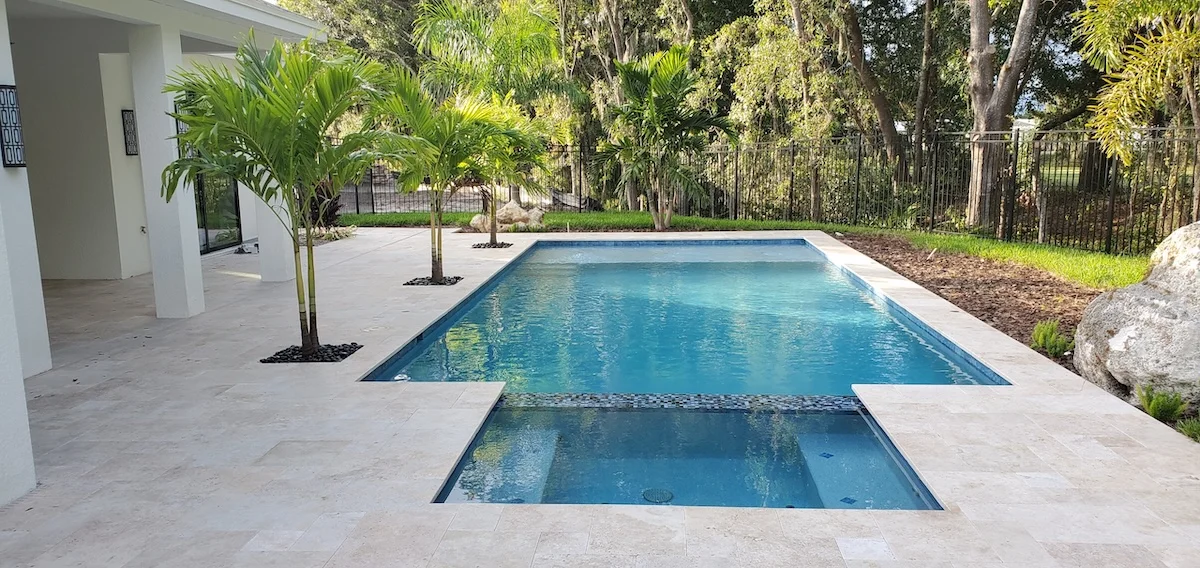
One of the most exciting parts of building a new pool is also one of the trickiest decisions you’ll make: how big should it be? Too small, and you might feel like you’re swimming in a bathtub. Too large, and you could end up with a pool that overwhelms your yard — and your budget. Fortunately, with a little planning, you can find a size that fits your space, your lifestyle, and your goals.
At Gulfstream Pools & Spas, we’ve helped hundreds of Tampa Bay homeowners design pools that feel just right. Here’s what we tell every client who asks about pool size.
Start with Your Backyard’s Actual Usable Space
Before you can think about pool size, you need to know how much space you’re actually working with. That means more than just measuring your backyard from fence to fence. Additionally, you’ll need to account for setbacks — the required distances between a pool and your home’s foundation, property lines, and utility easements.
In Florida, local building codes typically require pools to be set back at least 5 to 10 feet from property lines, though this varies by municipality. Your home’s foundation usually needs at least 5 feet of clearance as well. Once you subtract those setback requirements from your total yard dimensions, you’ll have a realistic picture of your buildable area.
As a general rule, your pool and deck area combined should not take up more than 25 to 35 percent of your total yard space. This leaves room for landscaping, outdoor furniture, and breathing room around the pool — things that ultimately make your backyard feel like a resort rather than a construction site.
Think About How You’ll Actually Use the Pool
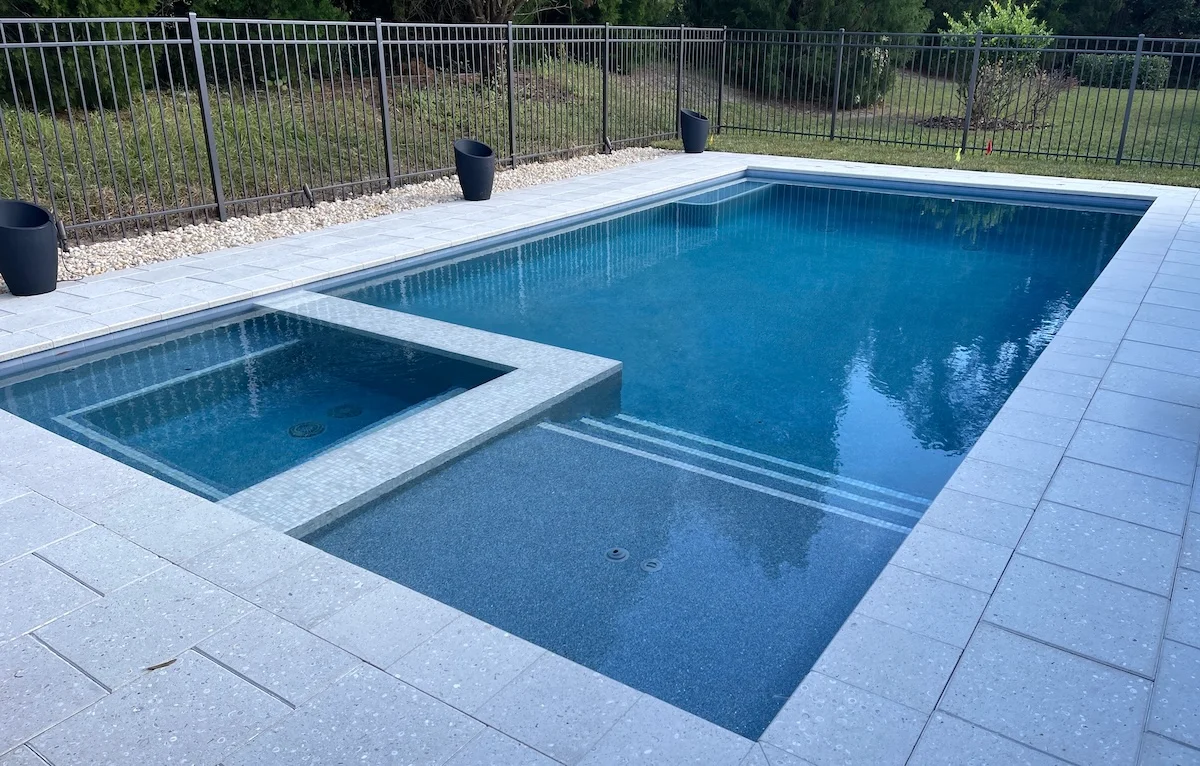
The right size pool depends largely on what you plan to do in it. Different lifestyles call for very different designs, so it’s important to be honest with yourself about how you’ll really use the space.
- Recreation and casual swimming: If you’re primarily using the pool for leisure — cooling off, lounging, and having fun with friends and family — a mid-sized pool in the 12×24 to 16×32 foot range typically works well. You get enough room to move around without needing a massive footprint.
- Fitness and lap swimming: If you want to use your pool for exercise, size matters more. Lap pools are long and narrow — typically 8 to 10 feet wide and at least 40 feet long. However, even a standard 15×30 or 20×40 pool can accommodate light lap swimming if you don’t need Olympic-style lengths.
- Entertaining and parties: If you love hosting pool parties, you’ll want something larger that accommodates groups comfortably. A pool in the 16×32 to 20×40 foot range gives guests plenty of room to swim, splash, and congregate without feeling cramped.
- Families with young children: Interestingly, families with toddlers and young kids sometimes do better with a smaller, shallower pool that’s easier to supervise. A tanning ledge or sun shelf (a shallow entry area) can also add a lot of value without requiring a larger overall pool.
Common Pool Sizes and What They Look Like in Practice
It helps to have a concrete reference point. Here’s a breakdown of common pool sizes and how they typically function:
- 10×20 feet: A compact plunge pool or small recreational pool. Great for cooling off, but limited for active swimming. Works well on smaller lots where space is tight.
- 12×24 feet: A popular choice for couples and small families. Offers enough room to swim freely without dominating the yard. Generally the minimum for comfortable recreational swimming.
- 16×32 feet: The sweet spot for many Tampa Bay homeowners. This size handles recreational swimming, light fitness, and small to medium gatherings with ease. It’s one of the most popular configurations we build.
- 20×40 feet and larger: These are statement pools. They handle large parties, serious lap swimming, and multiple people using the pool at once. However, they require a correspondingly larger yard and a larger budget — both upfront and ongoing.
Don’t Forget to Account for the Deck
Many homeowners focus exclusively on pool dimensions and forget that the deck is just as important. Your pool deck — the paved or pavers area that surrounds the pool — typically needs to be 3 to 5 feet wide on all sides at minimum. However, most homeowners prefer 6 to 10 feet on at least one side to accommodate lounge chairs, a table, or an outdoor kitchen.
Here’s a useful exercise: before committing to a pool size, lay out the pool and deck footprint with stakes and string in your yard. Walk around it. Sit in a chair inside the imagined deck space. This physical exercise helps you visualize the final result and often reveals that your initial size estimate was either too small or too large.
Furthermore, consider what else you want in your backyard. A pergola, outdoor kitchen, fire pit, and spa all compete for the same square footage. Planning for all of these elements together — rather than just the pool in isolation — leads to a more functional outdoor living space overall.
How Pool Size Affects Operating Costs
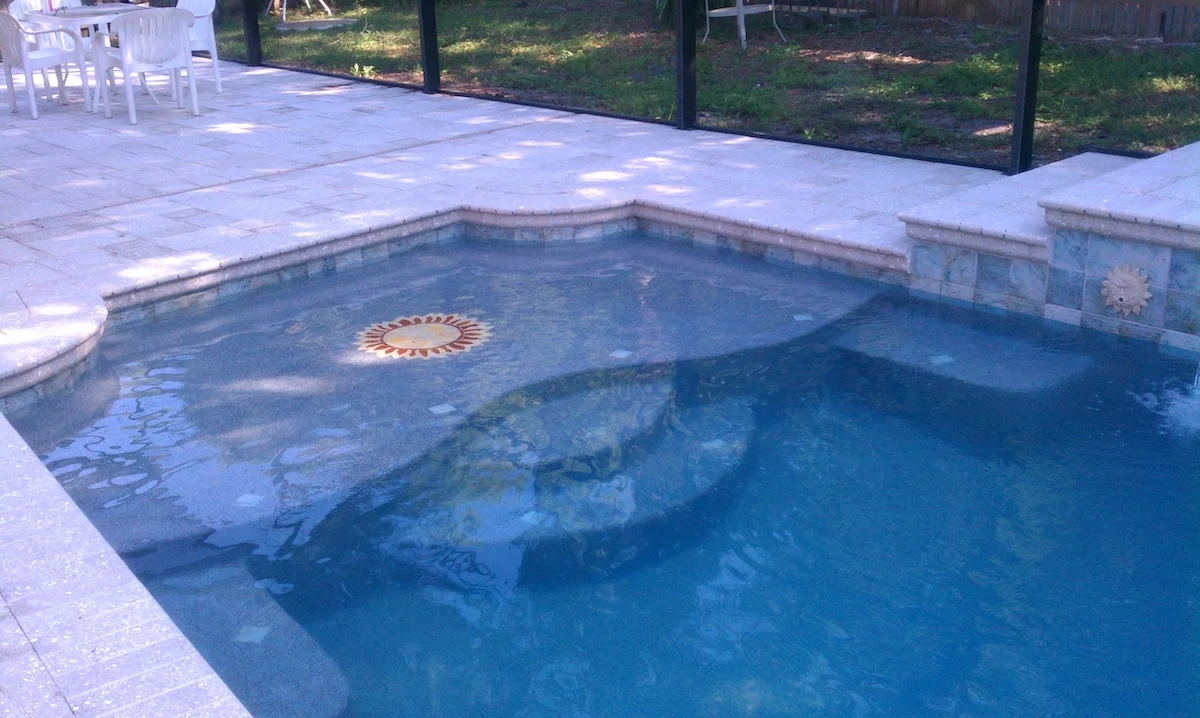
This is a factor many homeowners overlook until after the pool is built. Simply put, a larger pool costs more to operate. This affects your monthly expenses in several ways:
- Energy costs: A larger pool requires a more powerful pump to circulate water, which translates directly into higher electricity bills.
- Chemical costs: More water means more chemicals to keep it balanced and sanitary. This is an ongoing monthly expense that scales with pool size.
- Heating costs: If you add a pool heater — which is highly recommended in Tampa Bay to extend your swim season — a larger pool takes more energy to heat and more time to reach your target temperature.
For a detailed breakdown of what to budget for monthly pool operation, check out our guide: How Much Does It Cost to Run a Pool in Florida? Understanding these ongoing costs before you finalize your pool size is essential to making a decision you’ll feel good about for years.
Pool Shape and How It Affects Perceived Size
Here’s something many homeowners don’t realize: pool shape can make the same square footage feel completely different. A rectangular pool tends to feel more formal and open, while a freeform pool with curves and organic edges can feel larger or smaller depending on the design.
Additionally, freeform pools often blend more naturally into landscaping, which can make your entire backyard feel more cohesive and spacious. Conversely, a rectangular pool in a small yard can sometimes feel like a lap pool even if that wasn’t the intent.
Want to learn more about the differences between pool shapes? Read our post: What Is a Freeform Pool and Is It Right for Your Tampa Home? It covers everything you need to know about the pros and cons of different pool shapes.
What Florida Pool Safety Codes Say
Before finalizing your pool size, it’s important to understand that Florida has specific requirements governing pool construction. The Florida Building Commission sets baseline standards for pool construction, safety barriers, and equipment, but your local municipality may have additional requirements that are even more stringent.
Key considerations include:
- Pool barrier requirements: Florida law requires all residential pools to have a safety barrier — typically a fence at least 4 feet high with a self-closing, self-latching gate. This barrier must be factored into your yard planning.
- Setback requirements: As mentioned earlier, required setbacks from your property line, home foundation, and utility easements directly limit how large your pool can be in a given space.
- HOA restrictions: If you live in a homeowners association community, your HOA may have additional rules about pool size, placement, or appearance. Always check with your HOA before finalizing any design.
The good news is that a reputable pool builder will handle all permitting and ensure your pool is fully code-compliant from the start. At Gulfstream Pools & Spas, we manage the permitting process for every project we build.
The Right Size Is the One That Fits Your Life
Ultimately, the right pool size isn’t about fitting as much water as possible into your yard. Instead, it’s about creating an outdoor living space you’ll actually use and enjoy every day. Before making your final decision, ask yourself these questions:
- How often will we actually use the pool?
- Do we entertain frequently, or is this primarily for our immediate family?
- What other outdoor features do we want — a spa, outdoor kitchen, fire pit, or covered area?
- What’s our realistic budget — both for construction and for ongoing monthly costs?
- Are there any children or elderly family members whose needs should influence the design?
When you answer these questions honestly, the right pool size often becomes clearer. Moreover, working with an experienced pool builder — one who has seen hundreds of projects — can help you think through considerations you might not have on your own.
Let’s Find the Perfect Size for Your Backyard
Choosing the right pool size is one of the most important decisions in the entire pool-building process. Get it right, and you’ll have a backyard oasis that fits your lifestyle perfectly for decades. Get it wrong, and you may end up with a pool that feels too cramped — or one that overwhelms the space you worked so hard to create.
At Gulfstream Pools & Spas, we specialize in helping Tampa Bay homeowners design pools that are perfectly sized and tailored to their specific backyard, lifestyle, and budget. Our team will walk you through every consideration — from setback requirements to long-term operating costs — so you can make a confident, informed decision.
Ready to start planning your dream pool? Call us at (813) 925-0909 or visit GulfstreamPools.com to get started with a free design consultation. We’d love to help you bring your backyard vision to life.